When comparing small class sizes in Limassol private schools, ask about both the number of children in the class and how teaching is organised. A pupil-to-teacher ratio does not, by itself, tell you the size of the group your child will join or the support available during each lesson.
Golden Oak describes small classes and personalised guidance as part of its Primary approach. For parents, the useful next step is to connect that description with everyday questions: how does the teacher know when a child needs help, how is work adapted, and how do families hear about progress?
Class size and pupil-to-teacher ratio mean different things
Class size is the number of pupils in a particular class. A pupil-to-teacher ratio compares pupil numbers with teacher numbers across whatever group or setting the school is describing. Always ask what is included in the calculation and whether it refers to your child’s class, a school section or the whole school.
For a purely illustrative example, two groups of 12 pupils and one group of 24 pupils working with two teachers both involve 24 pupils and two teachers. The overall ratio is the same, but the organisation of lessons could feel different. This example is not a description of Golden Oak’s staffing.
That distinction matters when a family is choosing between schools. A headline number becomes useful once you understand who is present, when smaller groups are used and what the teacher does with the time available.
What Golden Oak currently describes
The school’s About page describes typical ratios of around 12–13 pupils per teacher in Preschool and Primary, and around 10 in Kindergarten. These are typical ratios, not a published maximum class size or a promise about every lesson.
Ask admissions to confirm the current number of pupils and staffing arrangements for the class your child would enter. If you are enquiring for a later academic year, ask when the school expects to be able to confirm those details. A present-day figure does not automatically establish a future class arrangement.
Look for how individual attention works
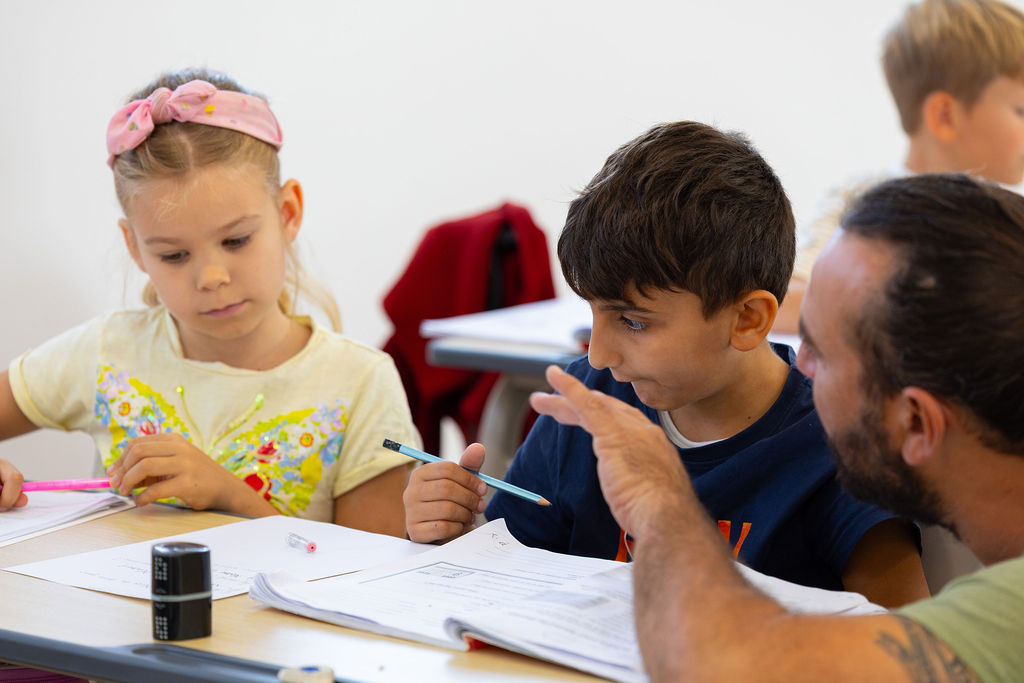
During a visit, ask the teacher to explain how they notice a pupil who has not understood something. You can also ask how they provide further challenge for a child who has already grasped the task. Both questions reveal more than a number alone.
- How do you check understanding during a lesson?
- How do you organise work when children need different levels of help?
- What happens when a pupil finishes quickly or finds a task difficult?
- How do you encourage quieter children to contribute?
- How do parents find out about a concern or an important next step?
You do not need access to another child’s work or personal information to explore these questions. A general explanation of teaching and communication is enough to understand the approach.
Consider the whole Primary experience
Golden Oak’s Primary programme combines Cambridge learning with creative subjects, physical education and personal development. When comparing schools, ask how pupils take part across that wider programme, including group activities and independent tasks.
Think about your own child’s preferences. They may enjoy discussion, need encouragement before answering aloud, or like time to work through an idea before sharing it. Explain these observations on your visit and ask how the classroom routine accommodates different ways of participating.
If your child has additional learning needs, make that a separate, specific conversation. A small class does not establish that a particular support arrangement is available. Read Golden Oak’s Learning Support information and discuss assessment, programme suitability and capacity with the school.
Keep a simple comparison record
For each school you visit, record the actual class being discussed, the pupil number, the staffing explanation and the date of the information. Add a few notes about feedback, classroom participation and parent communication. This gives you a useful comparison without treating one figure as a complete measure of school quality.
Try to use the same questions at each visit. If one answer refers to a class and another to a whole-school ratio, ask for clarification before comparing the figures directly.
Questions about small classes
Is the lowest ratio always the right choice?
A ratio cannot answer the full question. Look at teaching, curriculum, relationships and the arrangements available for your child alongside the numbers. Ask for concrete explanations that help you judge suitability.
Can I confirm the class size before applying?
Ask admissions about the intended class and start date. They can explain what is currently known and what still depends on enrolment or staffing arrangements. Request clarification if a figure is described as typical rather than fixed.
See the classroom approach for yourself
Book a Golden Oak school tour in Agios Athanasios, Limassol, and bring your questions about class size, teaching and individual attention. The most useful visit connects the school’s approach with the child who will experience it.