Preschool language development grows through meaningful conversation: listening to a story, explaining a game, asking for help and discovering words during play. For families choosing an English-speaking preschool in Limassol, a useful question is how children get opportunities to communicate throughout the day.
At Golden Oak in Agios Athanasios, the published Early Years programme includes stories, songs, conversation and role play. This guide explores how those experiences can support speaking and listening, alongside simple invitations you can try at home.
What does language-rich preschool learning look like?
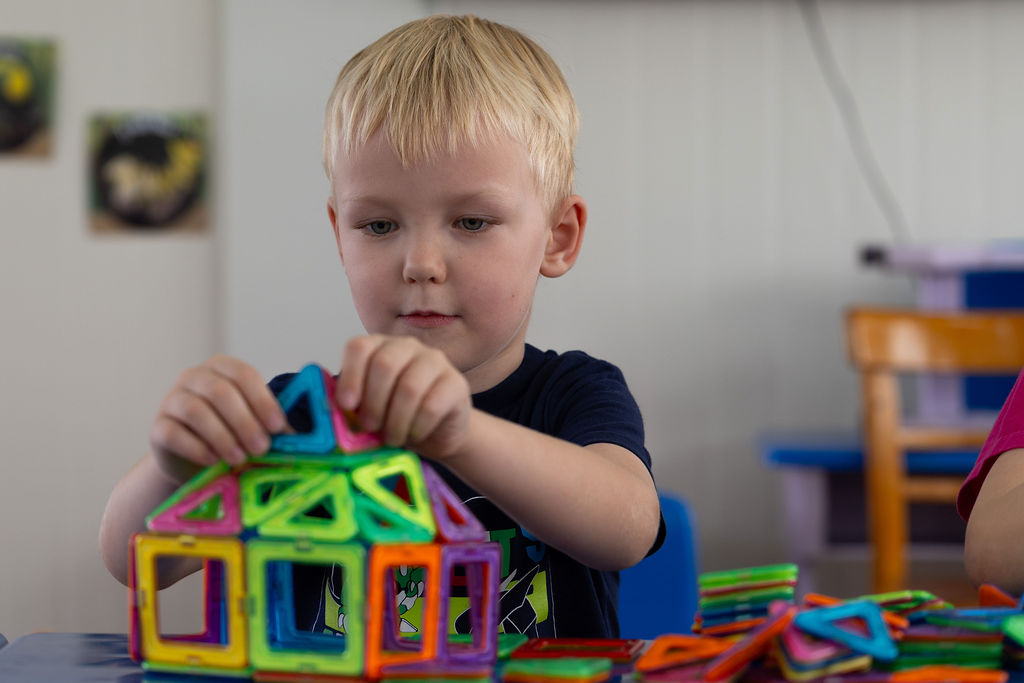
A language-rich environment gives children a reason to use words. A child might describe the house they are building, negotiate who will drive a toy bus or tell an adult what happened to a character. The conversation is connected to something that matters to the child.
England’s Department for Education highlights stories, rhymes, conversation and imaginative play in its guidance on exploring language. These are useful teaching ideas to discuss with a school; Golden Oak’s programme details are set out on its own Kindergarten and Preschool page.
Share a book as a conversation
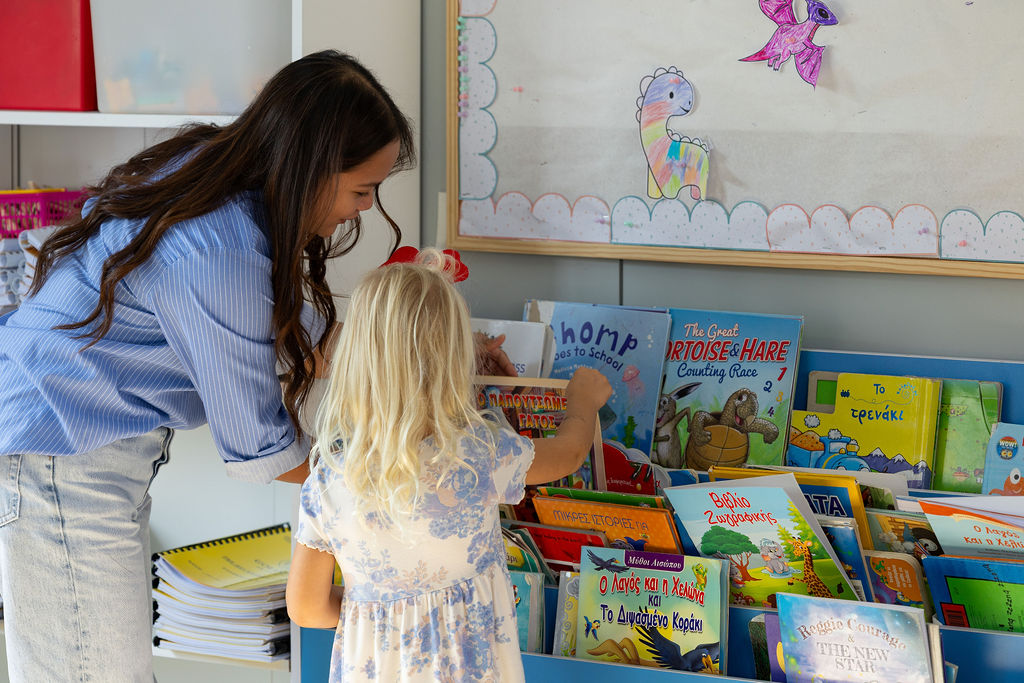
Choose a book your child wants to revisit. You could pause at one picture and wonder aloud about something happening there. Allow time for a gesture, a single word or a longer response, then continue the story.
For example, if a picture shows a dog beside an open gate, you might say, “I wonder where the dog wants to go.” If your child says “park”, you can respond, “Perhaps it wants to go to the park.” There is no need to ask a question on every page or turn the book into a test.
Give pretend play a reason to talk
Try opening an imaginary repair shop. Your child can decide which toy needs fixing, explain the problem and tell you when it is ready. You can join as a customer and follow the story they create.
A useful invitation might be, “The wheel keeps falling off. What should we try?” This leaves room for your child to explain an idea, rather than only name an object. Repeat a new word naturally when it becomes relevant again.
Use familiar songs and everyday routines
A familiar song can become a small shared performance. Let your child choose a movement, pause before a familiar ending or change a character together. Enjoy the rhythm and the exchange without requiring a polished performance.
Ordinary routines also provide topics. While preparing to leave home, talk through which belongings are needed and why. At dinner, invite your child to tell you about one thing they made or explored. A photograph or an object may provide an easier starting point than a broad question about the whole day.
Keep home language and school communication connected
If your family uses Greek or another language at home, tell the teacher which languages your child hears and uses. Share favourite stories, familiar expressions and the ways your child asks for help. This gives the school useful information about the child behind an English-language application.
Ask which words, books or songs are currently meaningful in class, then choose a manageable connection at home. Our guide to joining an English-speaking school without fluent English covers the separate admissions conversation.
What to ask when visiting a preschool in Limassol
Ask how adults involve quieter children, what small-group conversation looks like and how families hear about a child’s next steps. A concrete example from a recent activity is more useful than a general promise about confidence.
You could also ask how communication changes between Kindergarten, Pre-Reception and Reception. Golden Oak describes a developmental Early Years programme for Kindergarten and Pre-Reception, with Cambridge learning beginning in Reception.
Questions about preschool language development
Does my child need to speak in full sentences before a school tour?
A tour is an opportunity to discuss your child’s communication and intended class. Tell admissions what your child understands, how they express themselves and which languages they use, then ask about the appropriate next steps.
Is learning vocabulary the same as learning phonics?
Vocabulary concerns the meanings and uses of words. Phonics connects speech sounds with written letters. Both relate to literacy, but they answer different questions; see our phonics and early-reading guide.
How much should we practise at home?
Choose an enjoyable conversation, song or shared book that fits your routine. Ask your child’s teacher what would be useful for their current stage rather than setting a fixed daily word target.
Explore Golden Oak’s Early Years classrooms
Book a school tour to see the preschool environment, meet the team and discuss speaking, listening and your child’s starting point.