Creative learning in preschool gives children opportunities to explore materials, make choices and express an idea through pictures, sound, movement or pretend play. The learning may be in a changed plan, a new combination of colours or a story explained while making.
Golden Oak’s Early Years programme in Limassol includes art, music, movement and dramatic play. For parents exploring a preschool, looking at how an activity unfolds can reveal more than looking only at what goes home in a school bag.
Look for the choices within a creative activity
A useful question is what the child can decide. Can they select a material, change the way they use it or take the work in an unexpected direction? An adult can offer a technique and still leave space for the child’s intention.
The Department for Education’s guidance on self-expression discusses exploration and communication through materials. This provides a teaching reference for thinking about creativity, alongside Golden Oak’s own published Early Years programme.
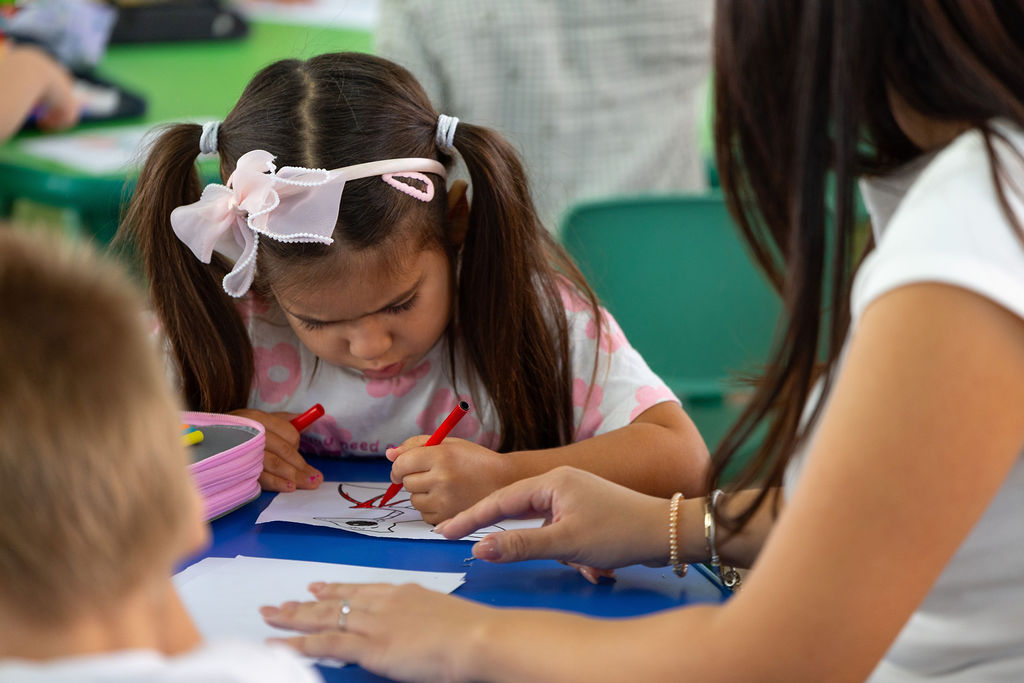
Try an art invitation with more than one possible outcome
Offer a large sheet of paper and a small choice of suitable drawing materials. Invite your child to invent a place where a tiny toy could live. The place could become a house, a cave, a floating island or something without a name yet.
Ask about a detail that interests you and allow the explanation to shape what happens next. If your child decides to cover one part or start again, ask what changed in their idea. Choose age-appropriate materials and supervise their use.
Let music become a conversation
Create a short rhythm by clapping or tapping your knees. Your child can answer with their own pattern, make yours slower or decide when both of you should stop. Swap who leads.
You can give the music an imaginary purpose: footsteps for a sleepy giant or the sound of a very small train. Talk about the difference your child creates. There is no need for specialist equipment or an audience.
Follow the story in pretend play
A cushion might become a ticket desk and a row of chairs might become a boat. Ask your child where the passengers are going and what they need for the journey. Join in with a role that leaves them room to make decisions.
If the story changes halfway through, follow the new direction. You might help make a sign, draw a map or find a suitable prop. The activity can connect making, talking and movement without needing a fixed finished product.
Respond to the process your child shows you
Instead of immediately guessing what a picture represents, ask if your child would like to tell you about it. Notice a choice you can actually see: a repeated shape, two colours placed together or a large area left empty.
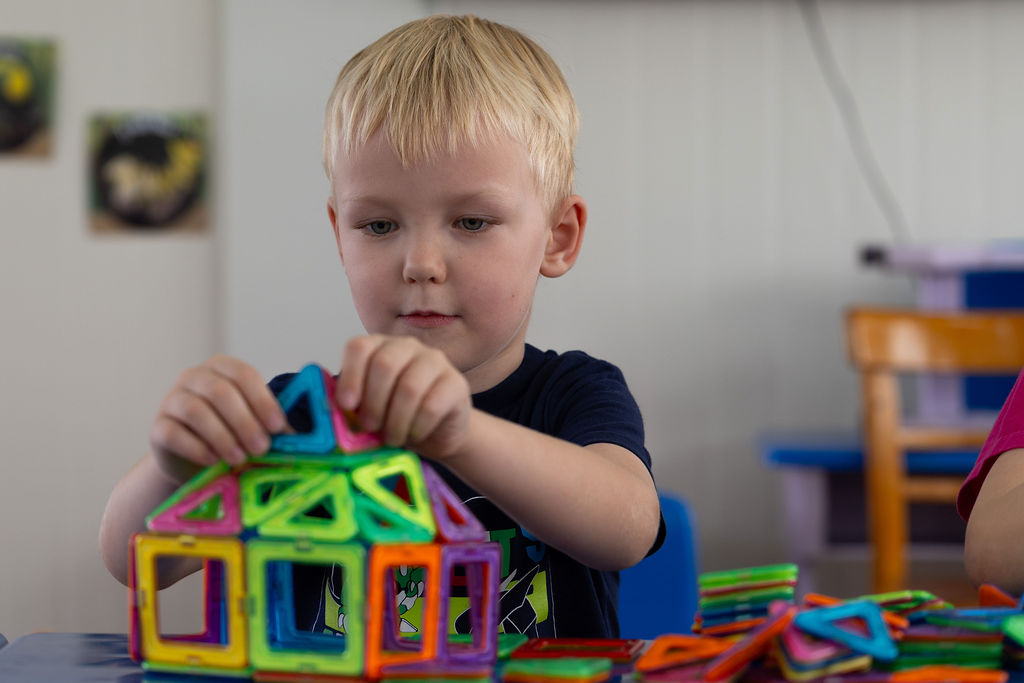
Comments such as “You tried a different way to join those pieces” give the child something specific to discuss. Our guide to fine motor skills and early writing explores the separate role of hand control and purposeful marks.
Separate the classroom programme from optional clubs
When visiting a kindergarten in Limassol, ask what creative experiences are available within the normal day and how they differ across age groups. Ask how children who prefer to watch first are invited to participate.
Golden Oak also publishes extra-curricular club information. Confirm age suitability, current availability, charges and arrangements for any optional activity you are considering.
Questions about creative learning in preschool
Should preschool art look like the teacher’s example?
Ask what the activity is intended to explore. A teacher may demonstrate a tool or process, while an open-ended invitation leaves room for children’s different decisions and ideas.
Does creative learning help a child who is quiet in English?
Art, music and movement offer ways to participate and communicate beyond a long spoken explanation. Discuss your child’s interests and communication with the teacher so the activity can be approached appropriately.
Does every creative activity need something to take home?
No. A sound pattern, a shared pretend journey or a changed construction may be the experience. Ask your child what they explored and how the idea developed.
Explore a creative Early Years environment
Book a Golden Oak school tour to see the classrooms in Agios Athanasios and discuss art, music and imaginative learning for your child’s age.