Social skills in preschool include joining a game, taking a turn, communicating a need and finding a way forward after a disagreement. These skills are part of everyday play, and children often need help with the words and actions a shared activity requires.
Families looking for a kindergarten in Limassol can use ordinary classroom moments to understand a school’s approach. Who helps a child join in? How does an adult respond when two children want the same toy? What information is shared with parents?
How friendships develop through preschool play
Golden Oak’s Early Years programme describes collaboration, empathy and friendships as part of learning. A school visit can help you connect those aims with the way adults support children in the room.
England’s Department for Education discusses adult support and children’s relationships in its early years relationships guidance. One useful principle is to consider the interaction itself: what each child is trying to do and what help would make participation possible.
Make taking turns visible and manageable
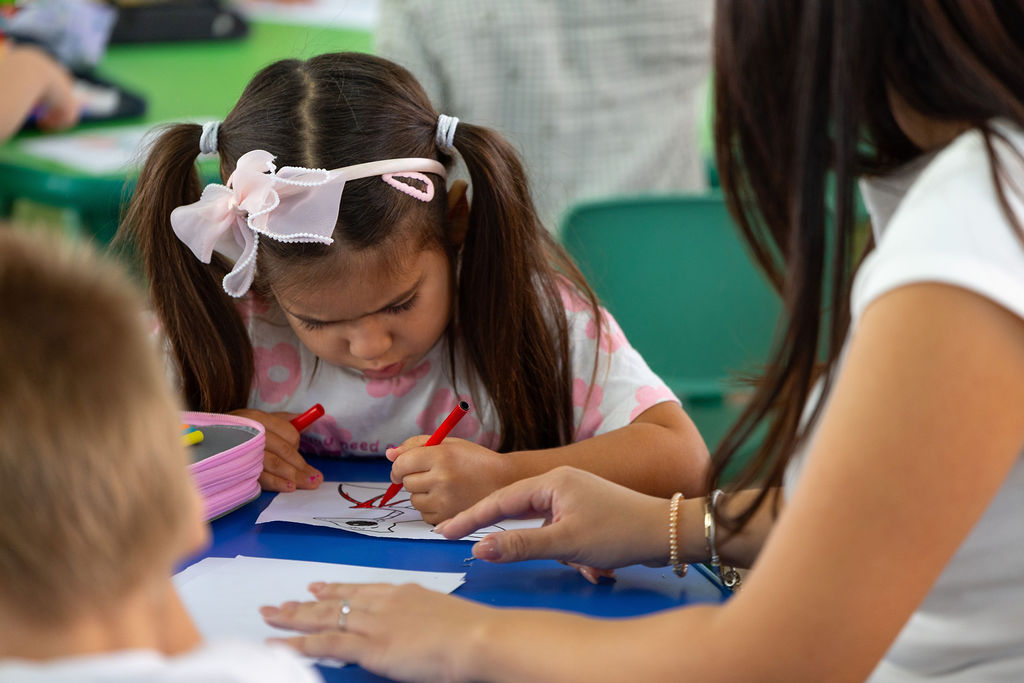
Try a shared drawing game at home. One person adds a road, the next adds a destination and the next chooses something to travel along it. Keep the turns short enough that each person can remember what is happening.
Describe the sequence clearly: “I’m adding the bridge, then you can choose where the road goes.” If waiting becomes difficult, simplify the game or make a second drawing alongside it. The aim is a shared experience that your child can understand.
Offer words for joining a game
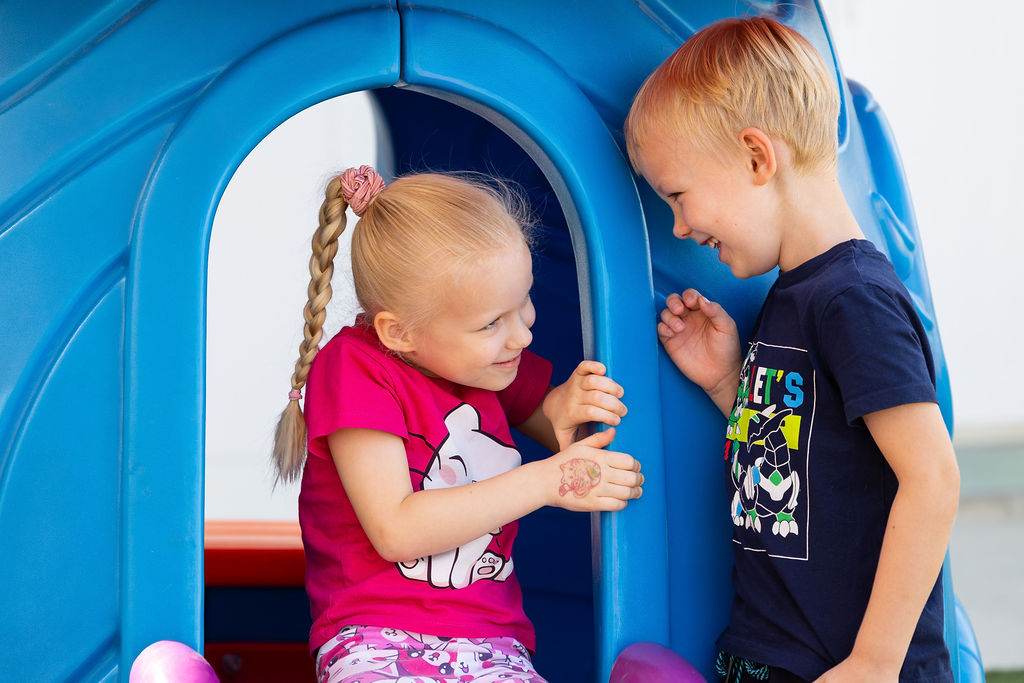
A child may know what they want to play without knowing how to enter an existing game. You can rehearse a few simple openings using toys: “Can my car use this road?” or “Could I be the customer?”
Make the invitation specific to the play. Asking for a role or offering an object gives the other child something clear to respond to. If the game is full or the answer is no, help your child choose another activity and consider when to try again.
Respond to a disagreement with a clear next step
Imagine two children reaching for the same pretend shopping basket. Start by noticing the problem in plain language: both want to use the basket. Help them communicate what they need and consider an achievable arrangement, such as one choosing groceries while the other prepares the checkout.
Adults should stay close enough to keep everyone safe and support the exchange. A child who is upset may need comfort and a pause before they are ready to solve the problem. Ask the school how it approaches these situations in your child’s class.
Notice participation without counting friends
Useful observations include returning to a familiar game, asking another child a question or accepting help from an adult. A child may enjoy one-to-one play more than a large group, and their preferred activities may change.
At home, ask about something concrete: who helped build the garage, who chose the song or what happened in the pretend café. If your child repeatedly describes being excluded or upset, share the examples with the teacher and agree how to follow up.
Connect families and teachers
Tell the school what your child enjoys, what tends to frustrate them and which words they use when they need help. Ask what adults have noticed during play and which response you could use consistently at home.
For the first weeks, our preschool settling-in guide covers arrival and goodbye routines. For ongoing contact, see how parent-teacher communication works at Golden Oak.
Questions about preschool social skills
Does my child need to be good at sharing before starting kindergarten?
Discuss your child’s current play and support needs with the school. Sharing and turn-taking are useful areas to explore with the teacher; ask how adults help children practise them in the intended class.
What if my child prefers playing alone?
Describe what you observe and ask the teacher what happens across different activities. Playing alone at one moment does not tell you how your child participates throughout the whole day.
Should I wait for a parent meeting to mention a concern?
If something is worrying you, contact the school through its agreed communication route. Give a specific example and ask what the teacher has noticed so you can decide the next step together.
See preschool relationships in context
Visit Golden Oak in Agios Athanasios, Limassol to explore the Early Years environment and ask how play, collaboration and friendships are supported.